You Won’t Believe These Hidden Cultural Gems in Malacca
Malacca isn’t just about old streets and tourist snacks—its cultural venues are straight-up Instagram gold. I’m talking vibrant heritage spots where history meets color, texture, and soul. Wandering through its UNESCO-listed lanes, I kept stumbling upon photogenic courtyards, art-filled shophouses, and temples glowing in the golden hour. If you’re chasing beauty with meaning, Malacca’s cultural heartbeat is impossible to ignore—and even harder to photograph without getting 100 likes.
Why Malacca’s Cultural Scene Stands Out
Malacca’s cultural identity is not the result of a single era or influence, but rather a rich tapestry woven over more than 500 years of trade, migration, and coexistence. As a former port city on the Strait of Malacca, it welcomed merchants, settlers, and rulers from China, India, the Malay Archipelago, Portugal, the Netherlands, and later Britain. This convergence of civilizations created a unique cultural mosaic, where Peranakan, Malay, Chinese, and colonial legacies live side by side—sometimes within the same building. The city’s designation as a UNESCO World Heritage Site in 2008 wasn’t just a recognition of its historical significance, but also a commitment to preserving the authenticity of its streetscapes, architecture, and traditions.
What sets Malacca apart from other heritage destinations is its lived-in quality. Unlike museums or reconstructed villages, the old town feels alive. Families still reside in centuries-old shophouses, temple bells chime during morning prayers, and the scent of spices lingers in the air long after the market closes. This authenticity enhances the visual storytelling potential for travelers and photographers alike. Every weathered wall, every hand-carved doorway, tells a story that doesn’t need to be staged. The patina of time—faded paint, moss-covered tiles, and sun-bleached signage—adds depth and character to every frame.
The city’s layered history is also reflected in its architecture. You’ll find Chinese clan houses with intricate roof sculptures standing next to Dutch colonial buildings painted in deep crimson, while Islamic motifs decorate mosques just blocks away. This visual diversity makes Malacca a dream destination for those who appreciate cultural complexity. It’s not about grand monuments or isolated landmarks, but about the way history unfolds in everyday spaces—alleyways, courtyards, and neighborhood temples. For the discerning traveler, especially one seeking meaningful experiences over checklist tourism, Malacca offers a rare opportunity to witness heritage as a living, breathing entity.
Jonker Street’s Living Heritage: More Than Just a Market
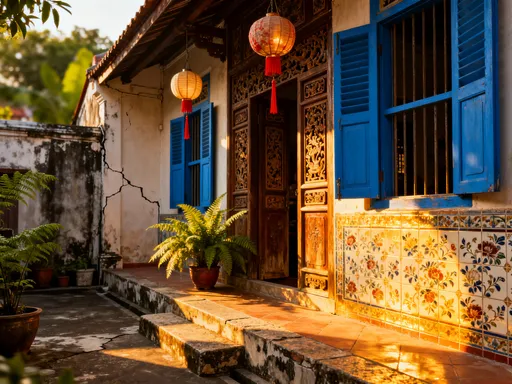
Often the first stop for visitors, Jonker Street (or Jalan Hang Jebat) is far more than a weekend night market filled with souvenirs and satay stalls. By day, it reveals itself as a corridor of cultural preservation, where restored 17th- and 18th-century shophouses stand as testaments to Malacca’s mercantile past. These narrow, two- or three-story buildings, once homes and warehouses for wealthy traders, now house boutique hotels, family-run museums, art galleries, and heritage cafes. Their facades—painted in soft pastels or warm earth tones—feature ornate woodwork, latticed windows, and decorative tiles that reflect a blend of Chinese craftsmanship and Southeast Asian adaptation.
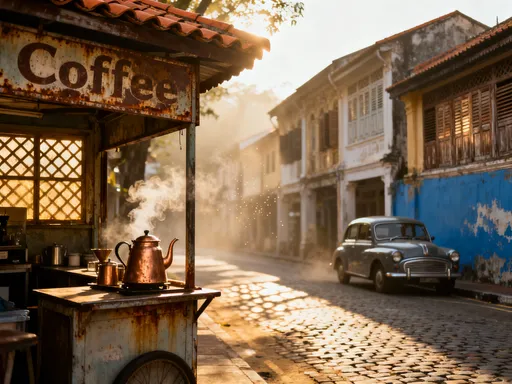
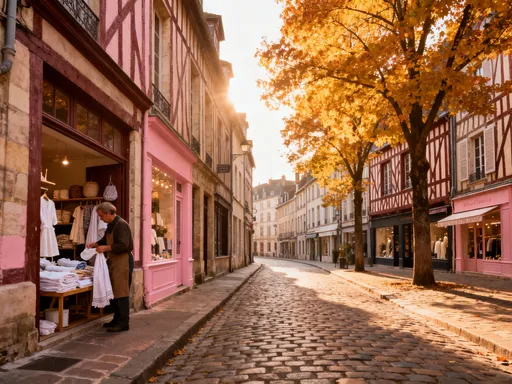
One of the most rewarding experiences is exploring Jonker Street in the early morning, before the crowds arrive. At sunrise, the soft light filters through the narrow lanes, casting long shadows and highlighting the textures of exposed brick and weathered timber. This is the perfect time to photograph the intricate details—carved door panels, antique signage, and the occasional cat lounging on a windowsill. The absence of tourists allows for unobstructed shots and a quieter connection to the space. Many of the shophouses open their doors to the public, offering glimpses into private worlds. The Baba & Nyonya Heritage Museum, though technically on a side street, is part of this cultural ecosystem and exemplifies the opulence and refinement of Peranakan domestic life.
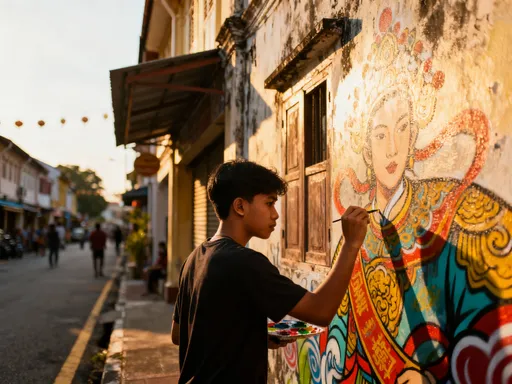
Beyond architecture, Jonker Street pulses with artistic expression. Street art, often overlooked, adds a contemporary layer to the historic backdrop. Murals depicting local legends, family scenes, or whimsical animals appear on blank walls, creating unexpected moments of delight. These artworks are not just decorative—they serve as visual narratives that connect the past with present-day Malacca. For photographers, they offer dynamic compositions, especially when paired with human elements: a vendor arranging flowers, a child chasing a balloon, or an elder sipping tea on a wooden stool. The key is patience and observation. The most compelling images often emerge not from posed scenes, but from the quiet, unscripted moments of daily life.
The Charm of Cheng Hoon Teng Temple: A Portrait of Serenity
Nestled in the heart of Malacca’s old town, Cheng Hoon Teng Temple stands as a beacon of spiritual and architectural beauty. Built in the 17th century by the leader of the Chinese community, it is recognized as Malaysia’s oldest functioning Chinese temple. Dedicated to Guan Yin, the Goddess of Mercy, the temple is not just a place of worship but a living cultural institution that continues to serve the local community. Its name, meaning 'Temple of Green Clouds,' evokes the ethereal quality of its atmosphere—especially during early morning rituals when incense smoke curls toward the ceiling, mingling with the soft glow of red lanterns.
The temple’s design is a masterpiece of southern Chinese craftsmanship, blending Fujian and Cantonese styles with local materials and adaptations. Every surface tells a story: dragons coil around wooden beams, phoenixes adorn roof ridges, and intricate carvings depict scenes from Chinese mythology and Buddhist teachings. The use of color is deliberate—red symbolizes prosperity and protection, gold represents divinity, and green echoes renewal. These elements come together in a space that feels both grand and intimate, ceremonial and personal. For photographers, the temple offers endless opportunities for composition. The central courtyard, open to the sky, allows natural light to flood in, illuminating altars, statues, and offerings with a warm, almost sacred glow.
What makes Cheng Hoon Teng truly special is the presence of ongoing rituals. Visitors may witness families offering joss sticks, monks chanting prayers, or devotees kneeling in quiet contemplation. These moments add movement and emotion to photographs, transforming static architecture into a narrative of faith and continuity. It’s important, however, to approach such scenes with respect. Photography is generally permitted, but flash should be avoided during prayers, and close-ups of individuals should only be taken with permission. The best approach is to observe quietly, wait for natural moments, and let the scene unfold. When done with sensitivity, the resulting images capture not just beauty, but reverence—a rare and powerful combination in travel photography.
Stadthuys & Dutch Square: Where Color Meets History
No image of Malacca is more iconic than the red-brick façade of the Stadthuys, standing proudly in the heart of Dutch Square. Built by the Dutch in the mid-17th century as the administrative center of their colonial government, the building—along with its neighboring clock tower—has become a symbol of the city’s European legacy. Painted in a deep, rust-red hue that contrasts vividly against the tropical sky, the Stadthuys is surrounded by open space, making it an ideal subject for wide-angle shots. The square itself often hosts local vendors selling fresh fruit, hand-painted postcards, and traditional snacks, adding a layer of everyday life to the historical backdrop.
The Dutch influence in Malacca began after they captured the city from the Portuguese in 1641. Over the next 150 years, they reinforced its fortifications, expanded its administrative buildings, and introduced European urban planning. The Stadthuys, originally serving as the governor’s residence and office, now houses the History and Ethnography Museum, where visitors can explore artifacts from Malacca’s colonial past. But for most travelers, the appeal lies in its visual impact. The building’s symmetrical design, arched windows, and clock tower create a strong geometric composition, especially when framed against the clear blue sky or a dramatic sunset.
For photographers, timing is everything. The golden hour—just after sunrise or before sunset—transforms the red bricks into a glowing canvas, deepening their hue and casting long, dramatic shadows. Rain, though unpredictable, can also enhance the scene. After a brief shower, the wet cobblestones reflect the building and sky, doubling the visual impact and adding a sense of stillness. Including local elements—such as a child flying a kite, a couple posing for a selfie, or a vendor arranging coconuts—can ground the image in the present, reminding viewers that history is not frozen, but continuously reinterpreted. The Stadthuys is not just a relic; it’s a living part of Malacca’s urban rhythm, where past and present coexist in vibrant harmony.
Hidden Peranakan Mansions: A Glimpse into Baba-Nyonya Elegance
Among Malacca’s most captivating cultural treasures are the restored Peranakan mansions, which offer an intimate look into the world of the Baba-Nyonya community. The Peranakans, also known as Straits Chinese, are descendants of Chinese immigrants who settled in Malaya and intermarried with local Malays. Over generations, they developed a unique hybrid culture—distinct in language, cuisine, clothing, and customs. Their homes, particularly those of wealthy merchant families, reflect this blend of Chinese opulence and Malay-Indonesian aesthetics, resulting in spaces that are both lavish and deeply personal.
The Baba & Nyonya Heritage Museum, located on Heeren Street, is the most well-known example. Housed in a series of interconnected shophouses dating back to the late 19th century, the museum preserves the original furnishings, decor, and family artifacts of a prominent Peranakan household. Walking through its rooms is like stepping into a time capsule: porcelain vases line the shelves, embroidered silk garments hang in wardrobes, and ancestral portraits watch over the space. The interiors are rich with symbolism—peacocks represent dignity, lotus flowers signify purity, and double happiness characters appear on everything from bed frames to teacups.
For photographers, the mansion is a treasure trove of detail. The use of color is bold yet harmonious—deep blues, emerald greens, and ruby reds dominate the palette, often contrasted with black or gold accents. Floral floor tiles, hand-carved wooden screens, and stained-glass windows create patterns that play with light and shadow. Close-up shots of textiles, furniture, and decorative objects reveal the craftsmanship behind every item. Even the layout of the house tells a story: the central courtyard promotes airflow in the tropical climate, while the ancestral altar occupies the most honored position in the home. These mansions are not just beautiful—they are educational, offering insights into a culture that valued family, tradition, and aesthetic refinement. Visiting them is a reminder that heritage is not only preserved in monuments, but in the quiet details of daily life.
Art Lane & the Creative Pulse of Malacca
If the old town is Malacca’s historical heart, then Art Lane is its creative soul. Located just off Jonker Street, this narrow alleyway has been transformed into an open-air gallery that celebrates local artistry in all its forms. What was once an overlooked passage is now a vibrant corridor filled with murals, sculptures, and interactive installations. Unlike static exhibits, Art Lane encourages engagement—visitors are invited to touch, pose, and even contribute to the evolving artwork. This dynamic quality makes it one of the most photographed spots in the city, particularly among families and younger travelers.
The murals here range from whimsical to meaningful. Some depict local legends, such as the story of Hang Li Po, the Chinese princess said to have married a Malaccan sultan. Others portray everyday scenes—a fisherman mending his net, a grandmother frying banana fritters, a boy flying a kite. These images connect the present to the past, reminding viewers of the city’s enduring traditions. Sculptures made from recycled materials add a sustainable dimension, while chalk art on the ground creates playful illusions of depth and movement. The ever-changing nature of Art Lane means that no two visits are exactly the same. New pieces appear regularly, often in response to festivals, seasons, or community events.
For photographers, Art Lane offers endless creative possibilities. The confined space forces inventive framing—shooting through archways, using reflections, or capturing silhouettes against colorful backdrops. The interplay of light and shadow, especially in the late afternoon, enhances the textures of paint and plaster. Because the area is designed for interaction, the best shots often include people—children laughing in front of a giant painted fish, couples posing beside a love-themed mural, or artists adding fresh strokes to a half-finished wall. These human elements bring warmth and authenticity to the images, transforming them from mere documentation into storytelling. Art Lane proves that cultural preservation doesn’t have to be rigid—it can be joyful, participatory, and constantly renewed.
Practical Tips for Capturing Cultural Venues Like a Pro
While Malacca’s cultural sites are inherently photogenic, capturing their essence requires more than just a smartphone and good lighting. Planning and respect go a long way in creating meaningful, high-quality images. Start by timing your visits wisely. Early mornings, between 7:00 and 9:00 a.m., offer the softest light and the fewest crowds, making it ideal for shooting at Jonker Street, Dutch Square, or temple courtyards. Late afternoons, especially during golden hour, provide warm, diffused light that enhances colors and textures—perfect for architectural details and street scenes.
Respecting local customs is equally important. Many cultural sites, particularly temples and private homes, are active places of worship or residence. Always ask before photographing people, especially during rituals or private moments. Avoid using flash indoors, as it can be disruptive and is often prohibited. Dress modestly when visiting religious sites—cover shoulders and knees—and remove shoes when required. These small gestures show respect and often result in more welcoming interactions, which can lead to more authentic photo opportunities.
From a technical standpoint, consider your equipment. A wide-angle lens is useful for capturing full façades and interior spaces, while a 50mm or prime lens works well for portraits and detail shots. Don’t underestimate the power of natural light—position yourself to use it creatively, whether it’s backlighting a subject or highlighting textures on a wall. If you’re shooting on a phone, clean the lens, use grid lines for composition, and tap to focus on your subject. Finally, comfort matters. Wear breathable clothing and comfortable walking shoes, as Malacca’s old town is best explored on foot. Carry a reusable water bottle, especially during midday heat, and take breaks in shaded areas or air-conditioned cafes. Staying hydrated and rested ensures you can fully enjoy and document your journey.
Conclusion
Malacca’s cultural venues aren’t just beautiful—they tell stories that connect past and present. With every photo, you’re not just documenting a place, but preserving a living heritage. Whether you’re chasing the perfect shot or a deeper travel experience, Malacca proves that true beauty lies in authenticity. Pack your camera. Your next unforgettable frame is waiting.